


HOME LATEST ISSUE
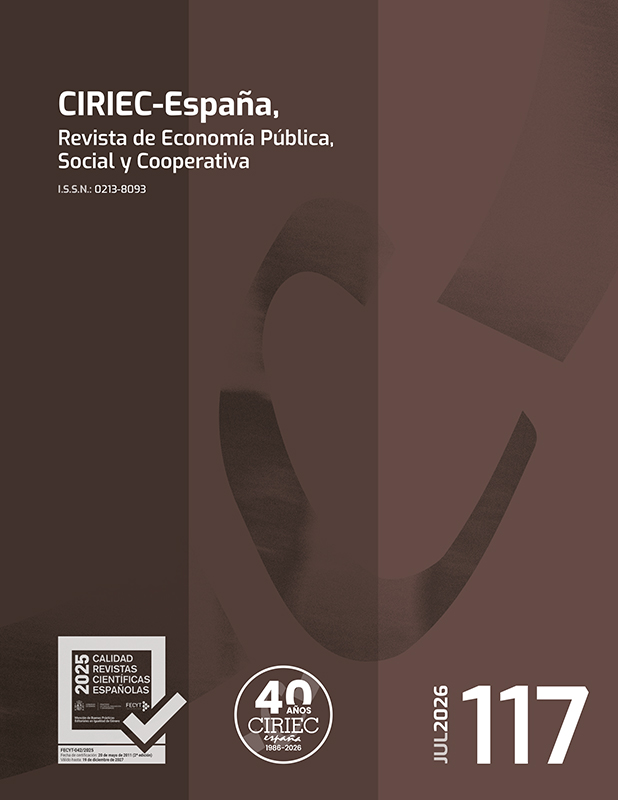
CIRIEC Nº 117 July 2026
Effects on social cohesion of the grant of use cooperative housing model in Catalonia
Authors: María Eugenia Montenegro Lizárraga
Keywords: Social cohesion, cooperative housing, grant of use model, sense of community, civic participation.
Econlit Keywords: H44, I31, I38, O18, Z13.
DOI: https://doi.org/10.7203/CIRIEC-E.117.29432
Abstract
The current state of social disintegration and social isolation makes it necessary to promote alternatives for social integration, with the generation of significant and sustained ties. Therefore, this paper evaluates the effects on social cohesion of the grant of use cooperative housing model. The research is exploratory and descriptive, employing a qualitative methodology. With a total of 17 participants from 4 projects of cooperative housing in the grant of use model, the results suggest a positive impact on the sense of community and civic participation. This is how its positive effects are recognized in the sense of community elements, a strengthening of social integration networks, a reduction in social isolation, and the empowerment of participants that denote greater satisfaction and social cohesion. Furthermore, this model aims to be a non-speculative alternative that provides access to the basic right to housing.
How to cite this article
MONTENEGRO LIZÁRRAGA, María Eugenia (2026): “Effects on social cohesion of the grant of use cooperative housing model in Catalonia”, CIRIEC-España, Revista de Economía Pública, Social y Cooperativa, 117, 5-36. DOI: https://doi.org/10.7203/CIRIEC-E.117.29432
Affordable cooperative housing. An international typology, supportive institutions and public policies
Authors: Manuel Ahedo Santisteban, Santiago Merino Hernández, Aitziber Etxezarreta Etxarri
Keywords: Housing systems, public policies, housing commons, cooperatives, urban policies.
Econlit Keywords: P1, H4, P13.
DOI: https://doi.org/10.7203/CIRIEC-E.117.30450
Abstract
In many contemporary societies and urban areas, affordable housing (housing at a socioeconomically affordable price for either rental or purchase) is increasingly necessary to counterbalance the negative effects of rising level of private property housing and speculative prices of housing, and therefore to reduce general socioeconomic inequalities. This paper explores the potential for cooperative housing to fulfil this social function and to be an effective solution for housing provision. Based on a review of the global diversity of cooperative housing, two broad types of socially oriented housing cooperatives are identified, according to their relation to profit with their corresponding logics: a) contextualized profit-seeking (social-civil logic); and b) non-profit-seeking (civil-public logic). These two types are illustrated with representative national, regional and local examples. Whereas the latter clearly aligns with the features of affordable housing, the former, given its complex nature, is the object of a thorough empirical discussion to determine the institutional conditions that can help it be socioeconomically affordable. In the selected cases the analysis identifies the institutional factors and public policies that have fostered the emergence and development of accessible cooperative housing. The article thus suggests and discusses the policies and institutional developments to support the affordability of cooperative housing.
How to cite this article
AHEDO SANTISTEBAN, Manuel; MERINO HERNÁNDEZ, Santiago & ETXEZARRETA ETXARRI, Aitziber (2026): “Affordable cooperative housing. An international typology, supportive institutions and public policies”, CIRIEC-España, Revista de Economía Pública, Social y Cooperativa, 117, 37-64.
Volunteer motivation as a key factor in retaining volunteers in NGOs
Authors: José Miguel Lorente-Ayala, Natalia Vila López, Inés Küster, Javier Casanoves-Boix
Keywords: NGO, volunteers, motivation, retention, perceived value, satisfaction, loyalty.
Econlit Keywords: L31, M14, M19.
DOI: https://doi.org/10.7203/CIRIEC-E.117.29480
Abstract
Volunteering forms a core part of the Third Sector of Social Action (TSAS) and is an important resource for ensuring the operational sustainability of non-governmental organisations (NGOs). However, high staff turnover and the difficulty of establishing stable relationships pose significant management challenges. This theoretical-conceptual article analyses the main perspectives on volunteer motivation to understand the factors influencing retention of volunteers within organisations. To this end, it reviews symbolic, functional and rational approaches, as well as contributions from marketing and Self-Determination Theory regarding perceived value. The analysis reveals that, although the functional perspective has been predominant in identifying motives for volunteering, it is limited in that it does not sufficiently explain the quality of motivation. In contrast, Self-Determination Theory provides a more profound insight into how satisfying basic psychological needs for autonomy, competence and relatedness can foster intrinsic motivation and sustained commitment. Similarly, the concept of perceived value broadens our understanding of volunteering as a meaningful experience by integrating emotional, social, functional, and ethical dimensions. Finally, the study situates these motivations within the context of liquid modernity and generational dynamics, particularly among young people. Implications for managing volunteer relationships are derived from an internal marketing perspective with the aim of strengthening satisfaction, loyalty, and retention.
How to cite this article
LORENTE-AYALA, José Miguel; VILA LÓPEZ, Natalia; KÜSTER, Inés & CASANOVES-BOIX, Javier (2026): “Volunteer motivation as a key factor in retaining volunteers in NGOs”, CIRIEC-España, Revista de Economía Pública, Social y Cooperativa, 117, 65-92. DOI: https://doi.org/10.7203/CIRIEC-E.117.29480
The influence of personal lifestyle on organizational behavior as a cause of isomorphism in values-based organizations
Authors: Ryszard Stocki, Fred Freundlich, Saioa Arando-Lasagabaster
Keywords: Lifestyle, Isomorphism, Values-Based Organizations, Cooperatives, Tacit Knowledge, Consumerism.
Econlit Keywords: L31, D91, I31, M14
DOI: https://doi.org/10.7203/CIRIEC-E.117.28913
Abstract
The objective of this article is to examine the degree to which personal lifestyles have an impact on value-based business decisions. Ultimately, the research, though exploratory, seeks to contribute to understanding value-degeneration in value-based organizations, the extent to which values degeneration might result from the lifestyle of participants in organizations. We believe that the global economy’s and global culture’s emphasis on consumerist values and ever-increasing material consumption –lifestyle– greatly endanger pro-social values and identity. Multiple regression analysis was carried out on data from study participants to test the relationship among three predictor variables; personal lifestyle, workplace dignity and life-control and the outcome variable: uncooperative behavior. Analyses confirmed our prediction that participants who lead a more consumerist lifestyle tend to be less oriented to pro-social values in business decisions. Hypotheses on the influence of other predictor variables on expertise in cooperative management were not supported. Study limitations and future implications are discussed.
How to cite this article
STOCKI, Ryszard; FREUNDLICH, Fred & ARANDO-LASAGABASTER, Saioa (2026): “The influence of personal lifestyle on organizational behavior as a cause of isomorphism in values-based organizations”, CIRIEC-España, Revista de Economía Pública, Social y Cooperativa, 117, 93-124. DOI: https://doi.org/10.7203/CIRIEC-E.117.28913
Conceptualizing integral cooperatives: an exploratory study
Authors: Andrés Spognardi
Keywords: Integral cooperatives, cooperative identity, multisectorality, cooperative typologies.
Econlit Keywords: M20, O17, O35, P13.
DOI: https://doi.org/10.7203/CIRIEC-E.117.30222
Abstract
This article develops a preliminary conceptual framework for the study of integral cooperatives in the Iberian Peninsula. Using a sequential mixed-methods design (qualitative coding and cluster analysis), it analyzes the organizational identity projected through the websites of 118 entities. This approach reveals a unifying feature that supports a minimal definition: integral cooperatives are self-managed organizations, formal or informal, that coordinate multiple economic activities within a single associative structure. Among the analyzed cases, different modes of articulation can be observed. In terms of identity, some anchor their narrative around a primary activity, while others define themselves as networks of activities without clear hierarchies. At the operational level, two modalities emerge: internal/functional integration (activities converge to fulfill a single core need) and external/diversification (the organization expands its activities to address multiple needs). Furthermore, based on the underlying purposes of these activities, three distinct organizational types can be identified: traditional cooperatives, primarily focused on meeting members’ needs; radical cooperatives, inspired by anti-capitalist ideals and critical of state authority; and new cooperatives, grounded in a pragmatic critique of the social and productive order and committed to building concrete alternatives for sustainability, inclusion, and community development.
How to cite this article
SPOGNARDI, Andrés (2026): “Conceptualizing integral cooperatives: an exploratory study”, CIRIEC-España, Revista de Economía Pública, Social y Cooperativa, 117, 125-156. DOI: https://doi.org/10.7203/CIRIEC-E.117.30222
Changes in the concentration of the larger global cooperatives. A decade under review (2010-2020)
Authors: Mercè Sala-Ríos, Teresa Torres-Solé, Mariona Farré-Perdiguer
Keywords: Larger cooperatives, size distribution, concentration, ‘entrenchment effect’, activity sector, location.
Econlit Keywords: D23, J54, L31, P13.
DOI: https://doi.org/10.7203/CIRIEC-E.117.30392
Abstract
The main goal of this study is to analyse changes over time in the size structure of cooperatives at the global level, with particular emphasis on trends in the concentration and persistence of large cooperatives. Concentration does not refer to market concentration, but rather to the extent to which activity, measured in terms of turnover, is concentrated among a small number of large cooperatives. We work with the 300 largest cooperatives based on turnover volume. The study covers a decade (2010-2020). Using data from the World Cooperative Monitor, we conduct a descriptive empirical analysis based on temporal dynamics and the distribution of turnover. We analyse three key factors: (1) the changes in the concentration level over the decade; (2) the ‘entrenchment effect’ among the largest cooperatives; and (3) the presence of sector-specific or location-specific effects to explain permanence among large cooperatives. The main findings suggest that concentration remained stable throughout the decade, reflecting offsetting dynamics between entry, exit and internal changes in the size structure over time. In addition, we find evidence of an ‘entrenchment effect’ at the upper end of the size distribution. Moreover, the study does not reveal a significant role of the sector and location in explaining changes among cooperatives that remain the largest throughout the decade.
How to cite this article
SALA-RÍOS, Mercè; TORRES-SOLÉ, Teresa & FARRÉ-PERDIGUER, Mariona (2026): “Changes in the concentration of the larger global cooperatives. A decade under review (2010-2020)”, CIRIEC-España, Revista de Economía Pública, Social y Cooperativa, 117, 157-193. DOI: https://doi.org/10.7203/CIRIEC-E.117.30392
A Comparative Study of Regional Social Economy Strategies in Spain
Authors: María Isabel Sánchez-Hernández, Ramón Sanguino, Ascensión Barroso, José Manuel Ausín Gómez
Keywords: Social Economy, strategic plans, public policies, conservative-administrative model, reformist-transformative model.
Econlit Keywords: P13, Q13, M14, L31.
DOI: https://doi.org/10.7203/CIRIEC-E.117.30797
Abstract
The Spanish Social Economy Strategy (SSES 2023-2027) updates the previous strategy based on the needs identified in the impact assessment of its predecessor and adapts it to the current economic and social context, in which it must act as a driver of transformation. In this context, several autonomous communities have developed plans and strategies aimed, to varying degrees, at strengthening the social business fabric and its sustainability, promoting digitalization, gender equality, labour inclusion, the circular economy, or rural development, among other dimensions. However, these strategies are not uniform. This study departs from the research proposition that distinct models of Social Economy promotion exist within the Spanish regional sphere. The main objective is to analyse the regional Social Economy strategies in force in Spain up to the end of 2024. To this end, a qualitative study is conducted through thematic analysis using ATLAS.ti, initially applying a deductive approach and subsequently complemented by an inductive analysis. In line with contemporary theories, the findings confirm the existence of two differentiated models for promoting the Social Economy: a conservative–administrative model and a reformist–transformative model. Finally, the paper presents the main conclusions and recommendations for the future of regional public policies.
How to cite this article
SÁNCHEZ-HERNÁNDEZ, María Isabel; SANGUINO GALVÁN, Ramón; BARROSO MARTÍNEZ, Ascensión & AUSÍN GÓMEZ, José Manuel (2026): “A Comparative Study of Regional Social Economy Strategies in Spain”, CIRIEC-España, Revista de Economía Pública, Social y Cooperativa, 117, 195-228. DOI: https://doi.org/10.7203/CIRIEC-E.117.30797
Local narratives on rural depopulation and territorial development: the case of the Sierra de Montánchez (Extremadura)
Authors: Luis Miguel Garay Gallastegui, Ricardo Francisco Reier Forradellas, Sergio Luis Náñez Alonso
Keywords: Rural depopulation, territorial development, local public policies, sustainable development goals, multilevel governance, natural language processing.
Econlit Keywords: R58, R23, O18.
DOI: https://doi.org/10.7203/CIRIEC-E.117.28842
Abstract
The depopulation of rural areas such as the Sierra de Montánchez in Extremadura poses complex territorial challenges that require analytical approaches sensitive to the local context. This study examines the extent to which municipal strategies and initiatives portrayed in the local media align with the Sustainable Development Goals (SDGs) and regional public policy frameworks. A multiple-case study design combining qualitative analysis of 47 local news articles and natural language processing techniques applied to news content, such as topic classification and tone analysis, was adopted for this purpose. The results reveal a clear focus of local action in areas where municipalities can intervene directly, such as tourism and agri-food, and a smaller number of initiatives linked to strategic sectors dependent on external decisions and resources, particularly digitalization, energy and social innovation. Based on these findings, the article proposes an analytical framework based on interpretation rules (heuristics), which allows for the systematic identification of the most frequent areas of action, the structural limitations of municipal action and the actual scope for local intervention. The study’s main contribution is its replicable methodological approach to analyzing territorial narratives on rural depopulation, and its provision of operational guidelines for designing coherent policies across different levels of government in rural territories with similar socioeconomic characteristics.
How to cite this article
GARAY GALLASTEGUI, Luis Miguel; REIER FORRADELLAS, Ricardo Francisco & NÁÑEZ ALONSO, Sergio Luis (2026): “Local narratives on rural depopulation and territorial development: the case of the Sierra de Montánchez (Extremadura)”, CIRIEC-España, Revista de Economía Pública, Social y Cooperativa, 117, 229-262. DOI: https://doi.org/10.7203/CIRIEC-E.117.28842
Towards a comprehensive model of the university entrepreneurial profile: conceptual framework for the evaluation of social and sustainable entrepreneurial intention
Authors: Valentina Hernández Muñoz, José Luis Monzón Campos, Jorge Torres Ortega
Keywords: Social economy, social entrepreneurship, sustainable entrepreneurship, entrepreneurial intention, university entrepreneurship.
Econlit Keywords: A13, I23, C38, M02, M13, O35.
DOI: https://doi.org/10.7203/CIRIEC-E.117.32317
Abstract
This study addresses the question of how social and sustainable entrepreneurial intention profiles are configured among university students, and which cognitive, attitudinal, motivational, moral, and contextual variables allow them to be differentiated. To this end, an integrated framework is proposed, combining contributions from the Theory of Planned Behavior (TPB) and the Theory of Reasoned Goal Pursuit (TRGP). Using a quantitative and exploratory approach, a psychometric questionnaire was administered to 422 university students, yielding a final dataset of 375 valid records after data cleaning. The instrument assessed beliefs, attitudes, values, motivations, knowledge, and contextual factors associated with entrepreneurial intention. Through multivariate segmentation techniques (GMM + PCA), differentiated profiles of potential entrepreneurs were identified. The results reveal three subgroups within each orientation, social and sustainable, defined by different levels of perceived control, motivation, knowledge, and prior experience. Likewise, an asymmetric overlap between both orientations is observed: students with sustainable entrepreneurial intention tend to also integrate social objectives, whereas this relationship does not appear with the same intensity in the opposite direction. The study confirms the usefulness of exploratory analytical approaches for capturing the complexity of university entrepreneurship and highlights the need to design differentiated educational strategies. It concludes that the profile of the social and sustainable university entrepreneur is multidimensional and requires integrative approaches in both research and educational intervention.
How to cite this article
HERNÁNDEZ MUÑOZ, Valentina; MONZÓN CAMPOS, José Luis & TORRES ORTEGA, Jorge (2026): “Towards a comprehensive model of the university entrepreneurial profile: conceptual framework for the evaluation of social and sustainable entrepreneurial intention”, CIRIEC-España, Revista de Economía Pública, Social y Cooperativa, 117, 263-300. DOI: https://doi.org/10.7203/CIRIEC-E.117.32317
Economic analysis of EU Regulation 2020/852 on sustainable investments from the perspective of agricultural cooperatives: The case of rice cultivation
Authors: Aarón Giménez-Chaparro, Eduardo Miranda Ribera, Francisco Salas-Molina
Keywords: Sustainable finance, cooperatives, agri-food industry, carbon footprint.
Econlit Keywords: G18, Q01, Q13.
DOI: https://doi.org/10.7203/CIRIEC-E.117.30472
Abstract
This study addresses the issue of access to sustainable finance for agricultural cooperatives within the framework of Regulation (EU) 2020/852, which defines the criteria for classifying an economic activity as environmentally sustainable. Given their connection to the social economy and their presence in rural areas, agricultural cooperatives are well-positioned to benefit from these financial instruments. The primary objective of this study is to conduct an economic analysis of the environmental objectives outlined in the regulation, to identify opportunities and barriers for agricultural cooperatives in accessing sustainable finance. The analysis focuses on rice cultivation as an illustrative case, using carbon footprint as a tool to assess the sustainability of economic activities. Possible economic implications for agricultural cooperatives are explored, in line with the criteria outlined in the regulation. In conclusion, the study highlights that the lack of regulatory specificity and the impossibility of partial compliance with the established criteria may limit the ability of agricultural cooperatives to benefit from these mechanisms. This situation highlights the need to establish selection criteria, such as calculating the carbon footprint, so that they can take advantage of the benefits of sustainable finance.
How to cite this article
GIMÉNEZ-CHAPARRO, Aarón; MIRANDA RIBERA, Eduardo & SALAS-MOLINA, Francisco (2026): “Economic analysis of EU Regulation 2020/852 on sustainable investments from the perspective of agricultural cooperatives: The case of rice cultivation”, CIRIEC-España, Revista de Economía Pública, Social y Cooperativa, 117, 301-320. DOI: https://doi.org/10.7203/CIRIEC-E.117.30472
Financial hybridization in cooperative banks: evidence for European countries
Authors: Thuy Seran, François Benhmad, Inmaculada Buendía-Martínez
Keywords: Dual hybridization, cooperative banks, Europe, trading activity, financial hybridization, mutualist logic, hybrid organizations.
Econlit Keywords: G23, G28, G30, M21, P13.
DOI: https://doi.org/10.7203/CIRIEC-E.117.32429
Abstract
The size and market share of European cooperative banks establish them as significant players in the banking sector. Over the past three decades, the banking industry has undergone significant changes, trending toward operational uniformity among institutions. This trend is transforming cooperative banks into hybrid organizations that combine the mutualist logic, which is central to their activities, with the commercial logic used by traditional banking institutions. This study examines this hybridization from a financial perspective, a previously unexplored topic that marks a novel contribution to literature. The transformation of cooperative banks is one of the clearest examples of hybridization affecting their structural design and business model. To this end, we analyzed 9,406 European cooperative bank balance sheets from 2005 to 2015 using a principal component analysis and a hierarchical ascendant classification. The results show that trading activity is becoming more significant in their operations, although the levels of adoption vary by countries and cooperative groups. Two conclusions emerge from these findings: first, the business model of cooperative banking is mutating, with a strong trend toward organizational convergence; second, the hybridization processes have a dual nature, being both structural and financial.
How to cite this article
SERAN, Thuy; BENHMAD, François & BUENDÍA-MARTÍNEZ, Inmaculada (2026): “Financial hybridization in cooperative banks: evidence for European countries”, CIRIEC-España, Revista de Economía Pública, Social y Cooperativa, 117, 321-344. DOI: https://doi.org/10.7203/CIRIEC-E.117.32429
Pathways for a Just Transition: a scoping review and conceptual framework of the conditional complementarity of basic income and the Social and Solidarity Economy
Authors: Julen Bollain, Jon Olaizola-Alberdi, Agurtzane Lekuona Agirretxe
Keywords: Unconditional Basic Income (UBI), Social and Solidarity Economy (SSE), Just Transition, distributive justice, procedural justice, public policies.
Econlit Keywords: Q01, D63, P13.
DOI: https://doi.org/10.7203/CIRIEC-E.117.30474
Abstract
Growing inequalities and structural crises have sparked debate on a just transition that ensures social equity and environmental sustainability. The path of just transition requires transformative strategies capable of bringing about changes to the prevailing status quo. This research analyses how Unconditional Basic Income (UBI) and the Social and Solidarity Economy (SSE) can be used as guidelines for a socio-economic reconfiguration that is part of a just transition strategy, focusing on how they can be combined and which tensions and enabling conditions shape their complementarities. UBI provides an income floor that reduces precarity and expands agency, while SSE advances democratic and sustainability-oriented forms of organisation and provisioning. Promoting these two strategies may produce isolated effects, and therefore their joint study is analytically relevant. However, their integration within a just transition paradigm leads to both congruences and divergences that need to be explored. This study uses a theoretical-exploratory approach supported by a scoping review and a comparative analysis of the literature from the three fields to examine the interactions between UBI and SSE, mapping definitions, mechanisms, actors and trade-offs through a structured extraction grid. The findings suggest that a strategic framework articulating these mechanisms can strengthen economic resilience while advancing distributive, recognition and procedural justice. However, their relationship is best understood as one of conditional complementarity, which depends on coherent policy design and multi-level governance. The move towards decarbonised models in a just way requires that the proposed strategies remain aligned and mutually reinforcing, without losing sight of their place in the framework of the just transition.
How to cite this article
BOLLAIN, Julen; OLAIZOLA-ALBERDI, Jon & LEKUONA AGIRRETXE, Agurtzane (2026): “Pathways for a Just Transition: a scoping review and conceptual framework of the conditional complementarity of basic income and the Social and Solidarity Economy”, CIRIEC-España, Revista de Economía Pública, Social y Cooperativa, 117, 345-374. DOI: https://doi.org/10.7203/CIRIEC-E.117.30474
Enhancing Policy Decisions with Monte Carlo Simulation for Social Return on Investment
Authors: Juan A. Román-Aso, Guillermo García-Martín, Fernando Coca-Villalba
Keywords: Efficiency, public spending, Social Return on Investment, Monte Carlo simulation.
Econlit Keywords: H43, H70, C15, D61.
DOI: https://doi.org/10.7203/CIRIEC-E.117.29305
Abstract
The optimal distribution of public resources is of critical importance for the achievement of societal cohesion and economic advancement. To this end, public administrations must employ evaluation methodologies to facilitate more effective resource allocation. Against this background, we have developed a method for streamlined, standardised, and systematic ex-ante evaluation of the Social Return on Investment (SROI) for a public spending intervention. This paper aims to demonstrate how its implementation can improve the efficiency of the decision-making process. The method comprises several phases, beginning with an extensive literature review conducted to identify common patterns in the evaluation criteria used in previous studies. We then use Monte Carlo simulation to generate a sequence of random scenarios for outcome incidences, financial proxies, and adjustment coefficients. The combination of these scenarios produces a range of potential values for the prospective SROI of a public spending policy, which can be used to detect deficiencies and promote efficiency improvements. Finally, by gathering primary data through surveys and supplementing it with secondary sources, we compare prospective estimations with retrospective outcomes to validate the effectiveness of our proposed method for policy planning.
How to cite this article
ROMÁN-ASO, Juan A.; GARCÍA-MARTÍN, Guillermo & COCA-VILLALBA, Fernando (2026): “Enhancing Policy Decisions with Monte Carlo Simulation for Social Return on Investment”, CIRIEC-España, Revista de Economía Pública, Social y Cooperativa, 117, 375-411. DOI: https://doi.org/10.7203/CIRIEC-E.117.29305